How to Clean Silver Jewelry at Home (Complete 2026 Guide)

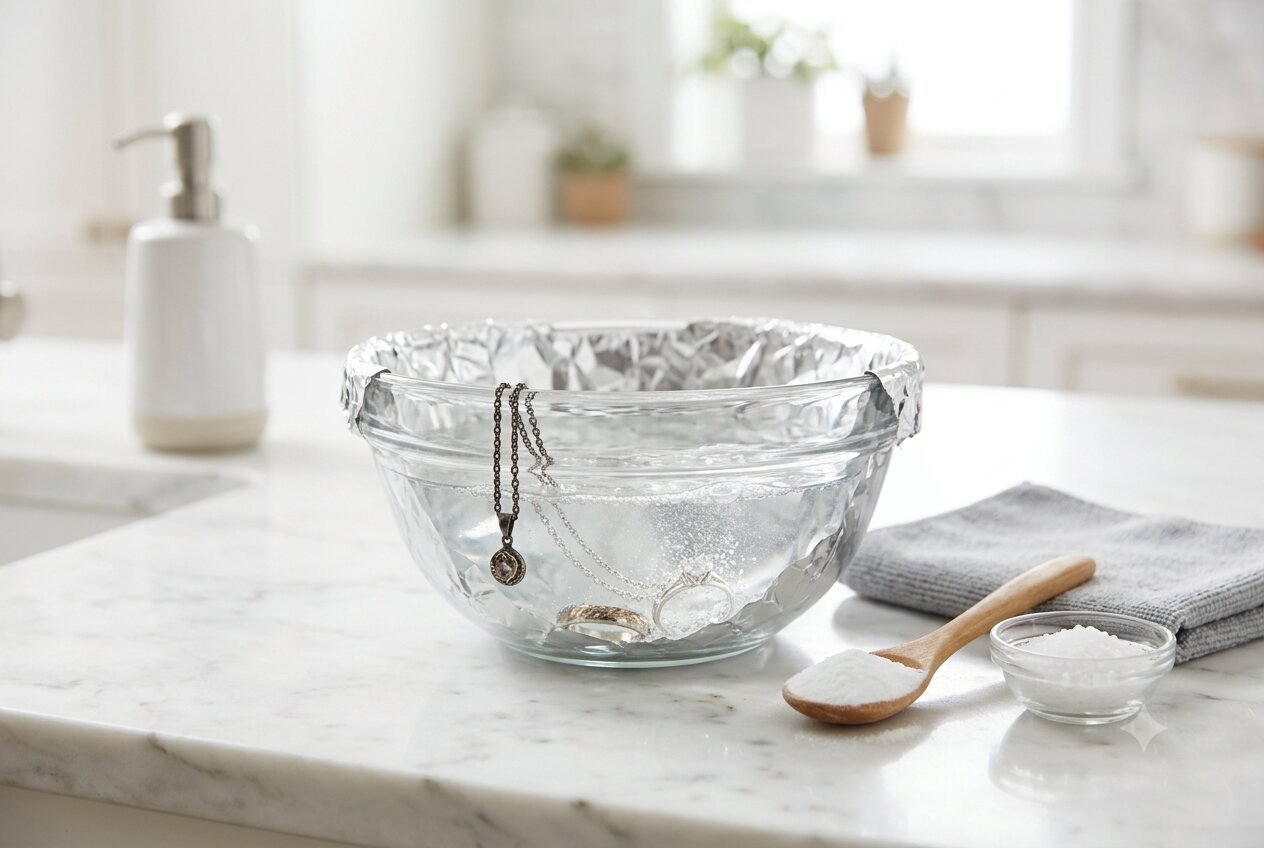
To clean silver jewelry at home, line a bowl with aluminum foil, add hot water, 1 tablespoon of baking soda, and 1 tablespoon of salt. Submerge your silver jewelry for 2–5 minutes, then rinse with clean water and pat dry. This removes tarnish through a simple chemical reaction with no scrubbing required.
Why Does Silver Jewelry Tarnish?
Silver is a beautiful, lustrous metal but it doesn’t stay that way forever.
Tarnish forms when silver reacts with hydrogen sulfide or sulfur dioxide in the air, creating a layer of silver sulfide on the surface. This is a natural oxidation process.
Common causes of tarnish include:
- Air exposure: even clean indoor air contains trace sulfur compounds
- Skin oils and sweat: your natural body chemistry accelerates tarnish
- Lotions, perfumes, and hairsprays: chemicals in beauty products coat and dull silver
- Humidity : damp environments speed up the chemical reaction
- Certain foods : eggs, onions, and mustard contain sulfur compounds
According to the Gemological Institute of America (GIA), sterling silver is an alloy made of 92.5% pure silver and 7.5% other metals (usually copper), and it’s the copper content that reacts most aggressively with air and moisture to form tarnish.
The good news: tarnish is completely reversible. You don’t need expensive professional cleaning. The right household items can restore your silver jewelry’s shine in minutes.
What You Need Before You Start
Before learning how to clean silver jewelry at home, gather these basic supplies:
Essential items:
- Aluminum foil
- Baking soda (sodium bicarbonate)
- Table salt
- Mild dish soap (like Dawn)
- Warm (not boiling) water
- Soft lint-free cloths or microfiber towels
- Soft-bristled toothbrush (old toothbrush works perfectly)
- Small glass or ceramic bowl
Optional items:
- White vinegar
- Non-gel toothpaste
- Commercial silver polish or silver cleaning cloth
- Silver anti-tarnish strips
Pro Tip: Always use soft clothes and brushes. Rough materials like paper towels or stiff brushes can leave fine scratches on silver surfaces.
Method 1: Baking Soda and Aluminum Foil (Best for Heavy Tarnish)
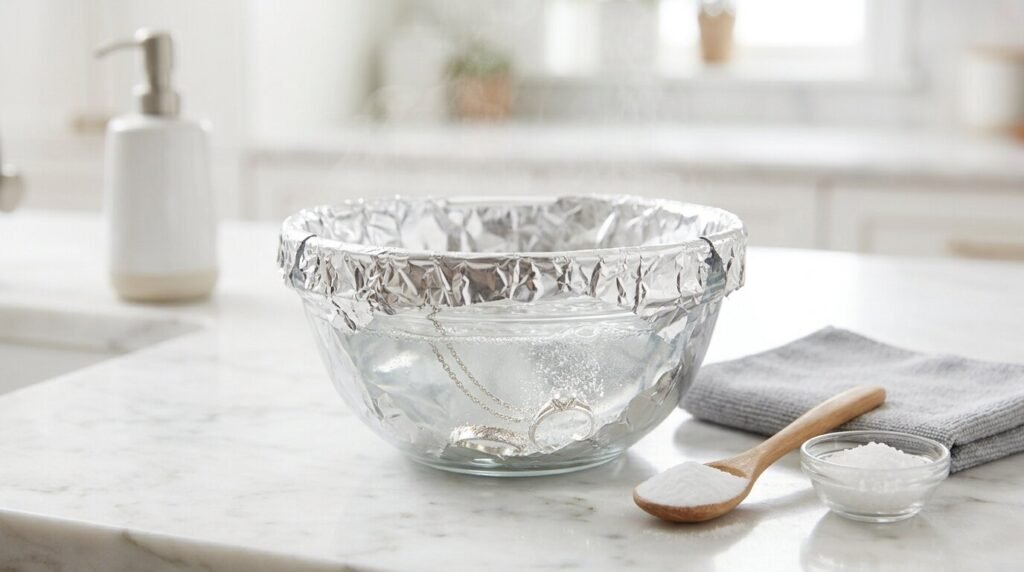
This is the most effective and well-known DIY method for removing heavy tarnish from silver jewelry. It works through electrochemical reaction. The aluminum foil acts as an anode, transferring the sulfur molecules from your silver back onto the foil.
What You Need
- 1 tablespoon baking soda
- 1 tablespoon table salt
- 1 cup hot water (not boiling)
- Aluminum foil
- Bowl
Step-by-Step Instructions
- Line your bowl with a sheet of aluminum foil, shiny side up.
- Add hot water about 1 cup to the bowl.
- Add 1 tablespoon of baking soda and 1 tablespoon of salt. Stir gently.
- Place your silver jewelry in the bowl, ensuring each piece touches the aluminum foil.
- Wait 2–5 minutes. You may see a slight yellowish or black residue transferring to the foil that’s the tarnish leaving your silver.
- Remove the jewelry using tongs or a spoon.
- Rinse thoroughly under cool running water.
- Pat dry with a soft microfiber cloth.
- Buff gently in circular motions to restore shine.
Why It Works
The hot salt water creates an electrolytic solution. The aluminum foil donates electrons, reversing the chemical reaction that formed silver sulfide. This is a scientifically validated method backed by chemistry with no harmful abrasives involved.
Best for: Heavily tarnished chains, bracelets, earrings, and plain silver rings.
Not suitable for: Jewelry with glued gemstones, pearls, or heat-sensitive stones.
Method 2: Dish Soap and Warm Water (Best for Light Tarnish)
For jewelry that’s only slightly dull or dirty, a gentle soap wash is all you need.
Step-by-Step Instructions
- Fill a small bowl with warm (not hot) water.
- Add 2–3 drops of mild dish soap and mix to create a light lather.
- Soak your silver jewelry for 5–10 minutes.
- Gently scrub using a soft toothbrush, paying attention to crevices, engravings, and settings.
- Rinse well under lukewarm water.
- Dry immediately with a soft cloth never air dry, as water spots can form.
Best for: Everyday cleaning of lightly tarnished or dirty silver jewelry.
Safe for: Jewelry with most gemstones, including diamonds, sapphires, and rubies.
Method 3: White Vinegar and Baking Soda
This combination creates a mild fizzing reaction that helps lift stubborn tarnish without abrasion.
Step-by-Step Instructions
- Mix ½ cup white vinegar and 2 tablespoons of baking soda in a bowl. It will fizz, that’s normal.
- Submerge your silver jewelry and let it soak for 2–3 hours.
- Remove and rinse with cool water.
- Dry and buff with a soft cloth.
Warning: Don’t use this method on silver jewelry with porous stones like turquoise, opals, or pearls. The acid in vinegar can damage these materials.
Best for: Plain sterling silver rings, chains, and bangles with heavy or stubborn tarnish.
Method 4: Toothpaste for Light Tarnish
Non-gel, white toothpaste contains mild abrasives that can polish away light surface tarnish.
Step-by-Step Instructions
- Apply a small pea-sized amount of white (non-gel) toothpaste to a soft toothbrush.
- Gently rub the toothpaste onto the silver in small circular motions.
- Rinse thoroughly to make sure no toothpaste remains in crevices.
- Dry and buff with a clean cloth.
Important: Only use plain white toothpaste. Avoid whitening toothpastes, gel formulas, or those with extra abrasives that can scratch polished silver.
Best for: Quick spot cleaning of lightly tarnished pieces.
Avoid on: Antique silver, silver-plated items, or jewelry with soft gemstones.
Method 5: Commercial Silver Polish
For serious collectors or valuable heirloom pieces, a commercial silver polish offers the most consistent, professional results.
How to Use Silver Polish
- Apply a small amount of polish to a soft cloth.
- Rub gently in back-and-forth strokes (not circular) following the grain of the metal.
- Use a clean cloth to buff away residue.
- Rinse if the product instructions recommend it.
- Dry thoroughly.
Popular options in 2026 include Hagerty Silver Polish, Wright’s Silver Cream, and Goddard’s Silver Polish all widely available and trusted by jewelers.
How to Clean Silver Jewelry with Gemstones
Cleaning silver jewelry with stones requires extra care. Different gemstones have different tolerances for water, heat, and chemicals.
Safe for Soaking
- Diamonds
- Rubies
- Sapphires
- Amethyst
- Topaz
Handle with Extreme Care
- Pearls: never soak; wipe with a damp cloth only
- Opals: very porous; avoid water immersion and acids
- Turquoise:absorbs liquids easily; use dry polishing cloth only
- Emeralds: often treated with oils; use mild soap and quick rinse only
- Coral: organic material that can dissolve in acids
For silver rings with gemstones, the dish soap and warm water method (Method 2) is your safest bet. Use a soft toothbrush to clean around the stone setting carefully.
How to Clean Sterling Silver vs. Pure Silver
Not all silver jewelry is the same. Understanding the difference helps you choose the right cleaning approach.
| Type | Silver Content | Tarnish Speed | Best Cleaning Method |
| Pure Silver (.999) | 99.9% | Slow | Mild soap & water |
| Sterling Silver (.925) | 92.5% | Moderate | Foil + baking soda |
| Silver-Plated | Thin coating | Fast | Gentle cloth only |
| Argentium Silver | 93.5%+ | Very slow | Mild soap & water |
Silver-plated jewelry needs the gentlest treatment. Because the silver layer is extremely thin, aggressive scrubbing or acidic solutions can strip it entirely. Stick to soft polishing cloths and mild soap.
How to Prevent Silver Jewelry from Tarnishing
Prevention is easier than cure. Follow these tips to keep your silver jewelry shining longer between cleanings:
Storage tips:
- Store silver in anti-tarnish bags or cloth pouches these contain activated charcoal or other tarnish inhibitors
- Add anti-tarnish strips to your jewelry box
- Store pieces individually to prevent scratching
- Keep silver in a cool, dry place away from direct sunlight
Wearing habits:
- Put jewelry on last when getting dressed after perfume, lotions, and hairspray
- Remove silver jewelry before swimming (chlorine causes rapid tarnishing)
- Take off silver before exercising sweat accelerates corrosion
- Remove before washing dishes or using cleaning products
- Wipe pieces down with a soft cloth after each wear
Regular wear actually helps! The friction from wearing silver jewelry naturally polishes away early-stage tarnish.
Common Mistakes to Avoid
Even well-meaning cleaning attempts can damage silver if done incorrectly. Avoid these common errors:
- Using paper towels or rough cloths: these create micro-scratches that dull the surface over time
- Using bleach or chlorine-based cleaners:these permanently damage silver
- Leaving jewelry wet: moisture causes fresh tarnish to develop quickly
- Scrubbing antique silver too hard :patina in recessed areas adds character and value; don’t remove it all
- Boiling silver :excessive heat can warp metal and loosen gemstone settings
- Soaking pearl or opal jewelry :these organic/porous materials absorb water and chemicals
- Using a toothbrush with stiff bristles :always opt for extra-soft bristles
- Rushing the rinse:leftover cleaning agents continue reacting with the metal
FAQs About Cleaning Silver Jewelry
Q: How often should I clean silver jewelry? A: For pieces you wear regularly, a gentle wipe-down after each use and a deeper clean every 1–2 months is ideal.
Q: Can I use hydrogen peroxide to clean silver? A: It’s not recommended. Hydrogen peroxide can react unpredictably with silver alloys and may damage gemstone settings.
Q: Does cleaning silver jewelry damage it? A: When done correctly with appropriate methods, no. Avoid harsh abrasives, acids (except mild vinegar), and heat.
Q: Can I clean silver in an ultrasonic cleaner? A: Ultrasonic cleaners can be used on plain sterling silver, but they’re not safe for pieces with fracture-filled stones, glued settings, or delicate gemstones.
Q: What’s the fastest way to clean silver jewelry? A: The aluminum foil and baking soda method produces visible results in under 5 minutes for most tarnished pieces.
Q: Will toothpaste scratch silver? A: Plain white toothpaste used gently is generally safe for sterling silver. Avoid abrasive or whitening formulas.
Conclusion
Knowing how to clean silver jewelry at home is one of the most practical skills for anyone who loves wearing silver. Whether your pieces are lightly dulled or heavily tarnished, the five methods covered in this guide from the baking soda and aluminum foil technique to commercial silver polish offer safe, effective solutions for every situation.
In 2026, you don’t need expensive professional cleaning services for routine maintenance. A few household items and 10 minutes of your time are all it takes to restore that brilliant shine.
The most important takeaways:
- Match your cleaning method to the type of silver and any gemstones present
- Always dry your jewelry immediately after cleaning
- Store silver properly to slow future tarnishing
- Clean regularly prevention beats restoration
Start with the gentlest method and work up only if needed. With proper care, your silver jewelry can last and look beautiful for generations.