When Wall Street Bleeds: What Happens to Gold and Silver When the Stock Market Crashes?

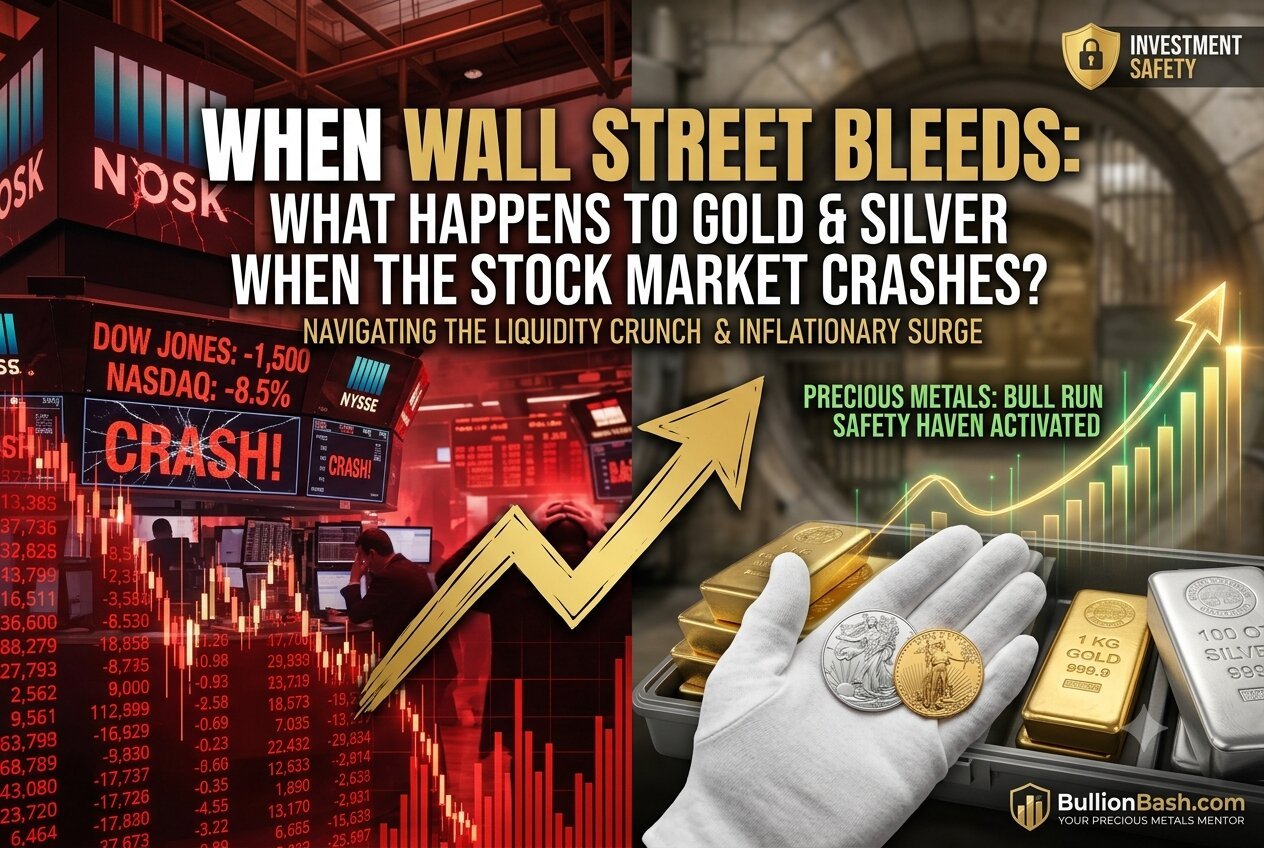
You are watching the evening news, and the tickers are flashing a violent red. The Dow Jones is down 1,500 points, tech stocks are plunging, and panic is spreading across financial social media like wildfire. In that exact moment of economic chaos, what happens to your physical wealth?
If you are holding precious metals, your immediate instinct might be to assume your portfolio is completely safe from the carnage. However, history tells a much more nuanced, multi-stage story. Understanding exactly what happens to gold and silver when the stock market crashes is the ultimate key to protecting your assets before the next financial panic hits.
The Panic Paradox: Why Metals Drop First
Many beginner investors buy physical bullion assuming it will instantly shoot to the moon the very second stocks start to tank. When they see gold and silver prices slide downward during the opening days of a market crash, they panic and sell at a loss.
This initial dip is not a sign that precious metals have lost their status as an ultimate safe haven. Instead, it is the result of a brutal Wall Street mechanism known as a liquidity crunch.
The Forced Selling Phenomenon
When the stock market collapses unexpectedly, major institutional investors, such as hedge funds, face massive margin calls. They legally owe their brokerages billions of dollars overnight to cover their losing stock positions.
To raise cold, hard cash instantly, these institutions are forced to liquidate their most stable, profitable, and highly liquid assets. Because gold and silver almost always hold their market value during normal times, they are the first assets thrown onto the chopping block to save failing equity portfolios.
The Decoupling: When Precious Metals Ignite
Once the forced institutional selling pressure clears out, usually within a few weeks of the initial crash, the true power of precious metals reveals itself. This phase is known as “decoupling,” where metals completely break away from the downward trajectory of the stock market.
The Flight to Physical Safety
As public trust in paper assets, banks, and corporate earnings shatters, real capital begins flooding out of Wall Street. Investors look for tangible assets with zero counterparty risk.
Because physical gold and silver cannot go bankrupt or be printed into oblivion by a corporate board, their demand skyrockets. This massive wave of retail and institutional buying drives the spot price rapidly upward while the broader stock market continues to bleed or stagnate for months or even years.
The Central Bank Effect (The Rocket Fuel)
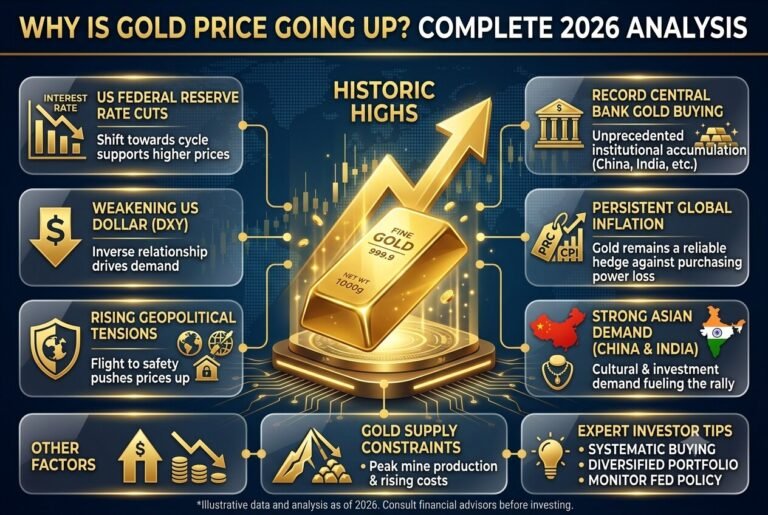
The final and most aggressive leg of a precious metals bull run during a recession is triggered by the governments themselves. To rescue a crashing economy, central banks inevitably implement aggressive monetary policies: cutting interest rates to zero and printing trillions of dollars in fiat currency.
When the market is flooded with newly printed paper money, the purchasing power of that currency drops significantly, triggering inflation. Since you cannot print physical gold and silver out of thin air, their value automatically adjusts upward to reflect the degraded currency, driving their dollar valuation to historic heights.
Expert Insight: Watch the Ratio, Not the Dollars
During a severe economic crash, do not stress over the daily dollar price of your metals. Instead, track the Gold-to-Silver Ratio. When the market bottoms out, this ratio often stretches to historical extremes, presenting an absolute goldmine opportunity to swap some gold for undervalued silver before the inflationary recovery begins.
Gold vs. Silver: Which Metal Reacts Harder?
While both metals serve as an insurance policy for your investment safety, they possess entirely different personalities during a market crisis due to their industrial and monetary differences.
- Gold (The Stable Shield): Gold behaves purely as a monetary asset and a reflection of fear. It rarely drops as low as silver during the initial liquidity crunch and moves upward with steady, reliable strength. It is not measured in jewellery metrics like karats when dealing with pure investment bars.
- Silver (The Volatile Rocket): Silver is a hybrid asset because half of its global demand comes from heavy industries like solar panels and electronics. During a crash, fears of a slowing industrial economy pull silver down harder than gold initially. However, during the monetary printing phase, silver’s smaller market size means it historically outperforms gold on a percentage basis during the recovery.
Performance Tracker: Historical Market Crashes
To understand the predictable cycle of precious metals, look at how they behaved during the two biggest economic shocks of the 21st century:
| Historic Crash Event | Phase 1: The Initial Shock | Phase 2 & 3: The Ultimate Recovery |
| 2008 Great Recession | Gold fell roughly 30% initially as hedge funds rushed for liquidity. | Once the Federal Reserve printed cash, Gold rocketed from $700 to $1,900+. Silver exploded from $9 to nearly $50. |
| 2020 COVID-19 Crash | Gold and silver both suffered a violent two-week drop in March 2020. | Within months, Gold broke its all-time high past $2,000, and silver surged over 100% from its crash lows. |
Frequently Asked Questions
1. Should I sell my gold and silver if they drop on the first day of a stock crash?
Absolutely not. Selling during the initial liquidity crunch means you are selling at the exact moment big institutions are dumping assets out of desperation. History shows that patience during this initial 2-4 week window is usually rewarded with a massive breakout shortly after.
2. Do mining stocks protect you the same way physical bullion does?
No. Mining stocks are still corporate equities traded on major stock exchanges. During a massive market crash, mining stocks will often plunge heavily alongside regular stocks because they are tied to stock market index funds, regardless of the physical metal price.
3. How long does it take for gold and silver to start rising after a crash?
Historically, the decoupling phase begins anywhere from two weeks to a month after the initial stock market collapse, right around the time the central banks announce emergency rate cuts or bailouts.
4. Will a crash affect the premiums on physical coins and bars?
Yes, dramatically. During a stock market crash, the public demand for physical metal becomes so intense that retail dealers completely run out of stock. This causes physical premiums to skyrocket, meaning you will pay significantly more over the official spot price to get physical metal into your hands.
The Bottom Line
A stock market crash is a terrifying event for traditional paper portfolios, but for a precious metals stacker, it is the ultimate validation of their strategy. While a liquidity squeeze might cause an initial dip, the inevitable currency printing and flight to safety have historically sent physical metals into massive, long-term bull markets.
Now that you know how a market crash alters the value of your assets, make sure you aren’t leaving your investments vulnerable to local threats. Head over to our definitive guide on “How to Store Silver at Home Safely: The Ultimate Guide“ to build an impenetrable home vault today!