Silver Coins and Silver Bars: Which Is Best for Your Vault?

You have finally decided to protect your hard-earned wealth against inflation by investing in physical precious metals. But as soon as you open a dealer’s website, you hit a massive roadblock: should you buy sovereign coins, or are raw cast bars the smarter play?
Making the wrong choice can lead to overpaying on premiums or struggling to liquidate your assets down the road. If you are torn between silver coins and silver bars, this guide will break down the exact pros, cons, and strategic uses for both so you can invest with total confidence.
The Great Silver Debate: An Overview
Before filling your safe, you need to understand that both formats represent high-purity bullion. However, they serve completely different purposes in a modern investment portfolio.
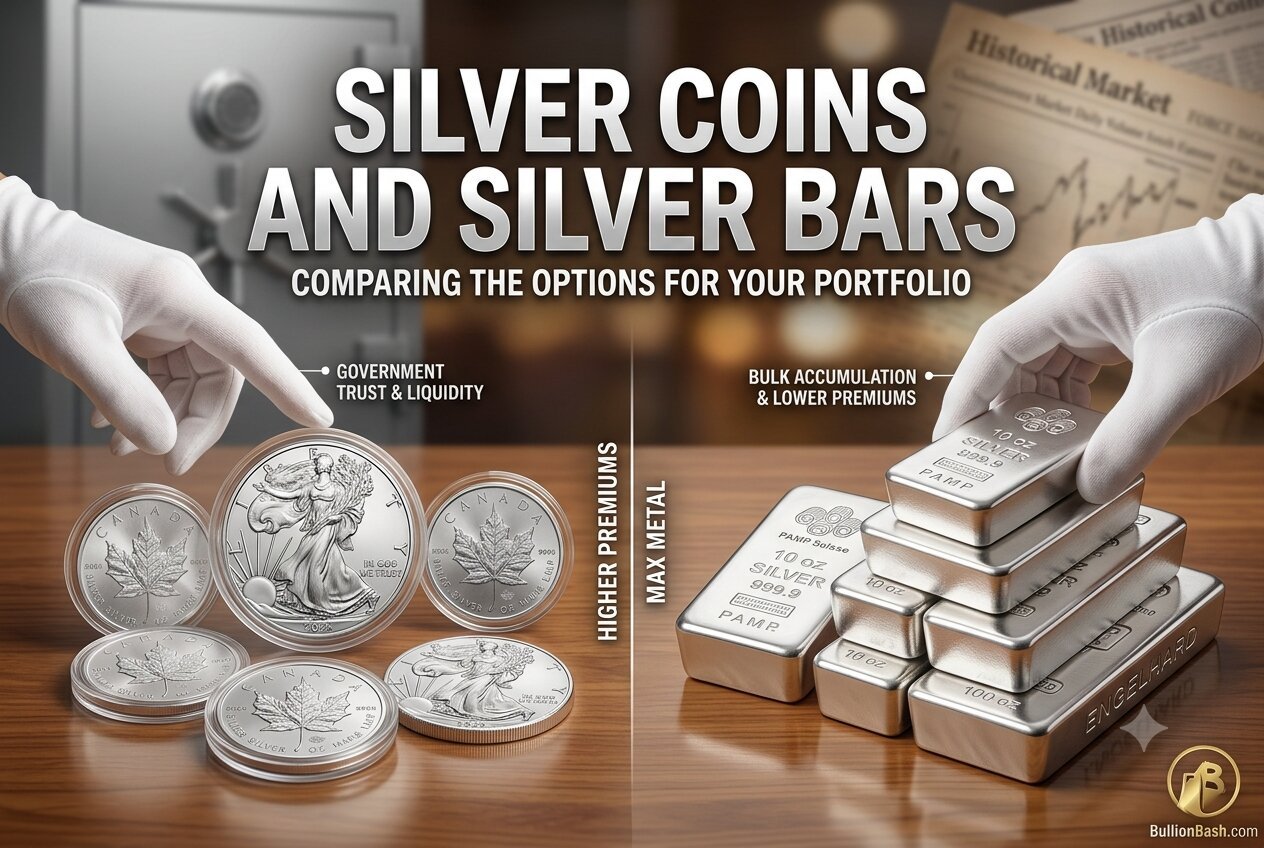
Coins offer government-backed security and collector appeal, while bars give you the maximum amount of pure metal for your dollar. Let’s look at how each asset impacts your long-term investment safety and purchasing strategy.
Silver Coins: The Sovereign Choice
Silver coins are minted by official government mints and carry a face value, making them legal tender. Examples include the famous American Silver Eagle and the Canadian Silver Maple Leaf.
High Liquidity and Global Trust
Because government mints guarantee the weight and purity of their coins, they are instantly recognised worldwide. This means when it is time to sell, you can easily liquidate them at any local or international coin shop without complex testing.
The Premium Penalty
The main drawback of coins is their higher upfront cost. Mints charge a higher premium over the global market value (spot price) due to intricate designs, anti-counterfeiting features, and government manufacturing costs.
Silver Bars: The Stacker’s Dream
If your main goal is to accumulate as many physical ounces of silver as possible, bars are your best friend. Private mints and refineries produce these in sizes ranging from 1 ounce to 100 ounces or more.
Maximum Metal for Your Money
Silver bars carry much lower manufacturing premiums than coins. When you purchase a 10 oz or 100 oz bar, you are getting raw, industrial-grade investment metal at a price much closer to the true market spot price.
Storage and Size Advantages
Bars are rectangular, uniform, and incredibly easy to stack inside a home safe or a safety deposit box. They maximize your physical space, allowing you to build a massive footprint of wealth in a relatively small area.
Pro-Tip: Mind the Brand
Always purchase bars from well-known, LBMA-approved refiners like PAMP Suisse, Engelhard, or Valcambi. Lesser-known private mints might save you a few cents on the premium, but they are much harder to verify, which can hurt your resale speed later.
Side-by-Side: Coins vs. Bars
To help you visualize your portfolio allocation, look at how silver coins and silver bars compare across key investor metrics:
| Feature | Silver Coins | Silver Bars |
| Issuer | Government Mints | Private Refineries / Mints |
| Legal Tender Status | Yes (Has face value) | No (Value is purely weight-based) |
| Premium Over Spot | Higher | Lower |
| Best For | High flexibility & liquidity | Pure bulk accumulation |
| Storage Efficiency | Medium (Takes up more space) | High (Easy to stack uniformly) |
How to Mix Both for Ultimate Investment Safety
You don’t actually have to choose just one. In fact, seasoned stackers rarely do. A balanced approach gives you the best of both worlds.
Many investors utilize a strategy similar to our core allocation models: they put 80% of their capital into large silver bars to get the best price per ounce, and 20% into recognizable sovereign coins for quick, emergency liquidity if they ever need to sell a small amount of metal fast.
Frequently Asked Questions
1. Do silver coins or silver bars tarnish faster?
Both will tarnish at the exact same rate if exposed to humidity, as they are both made of pure .999 fine silver. However, tarnish harms the premium value of a coin much more than it hurts a raw investment bar.
2. Are silver bars easier to fake than silver coins?
Yes. Large bars are easier for counterfeiters to replicate because they lack the intricate, micro-engraved security details found on modern sovereign coins. This is why buying certified brands is vital for your peace of mind.
3. Is the purity different between coins and bars?
No. Both investment-grade coins and bars typically feature a purity of 99.9% (.999) or 99.99% (.9999) pure silver. Pure bullion is never measured in gold metrics like karats.
4. Can I clean my silver bars if they get dark?
While you should never scrub a numismatic coin, a heavily tarnished silver bar can be carefully wiped down with a clean microfiber cloth since its value relies strictly on its weight rather than aesthetic perfection.
Final Thoughts
Choosing between silver coins and silver bars comes down to your personal goals. If you want low premiums and bulk storage, buy bars. If you want instant recognition and a government guarantee, stick to coins.
Now that your silver foundation is solid, make sure you know how to keep your entire precious metals collection secure. Head over to our comprehensive guide on “What is Bullion?” to discover how the global market prices these incredible assets!