What is Bullion? The Ultimate Beginner’s Guide to Precious Metals Investing

If you are just starting to look at precious metals, you have likely come across the term “bullion” everywhere. It is the gold standard of investing, literally. But what is bullion, exactly? Is it different from the coins you see in history books? And why do savvy investors insist on keeping a portion of their wealth in these bars and coins?
In this guide, we will peel back the layers of the precious metals market to help you understand why bullion is the foundation of long-term wealth preservation.
1. Defining Bullion: More Than Just Shiny Metal
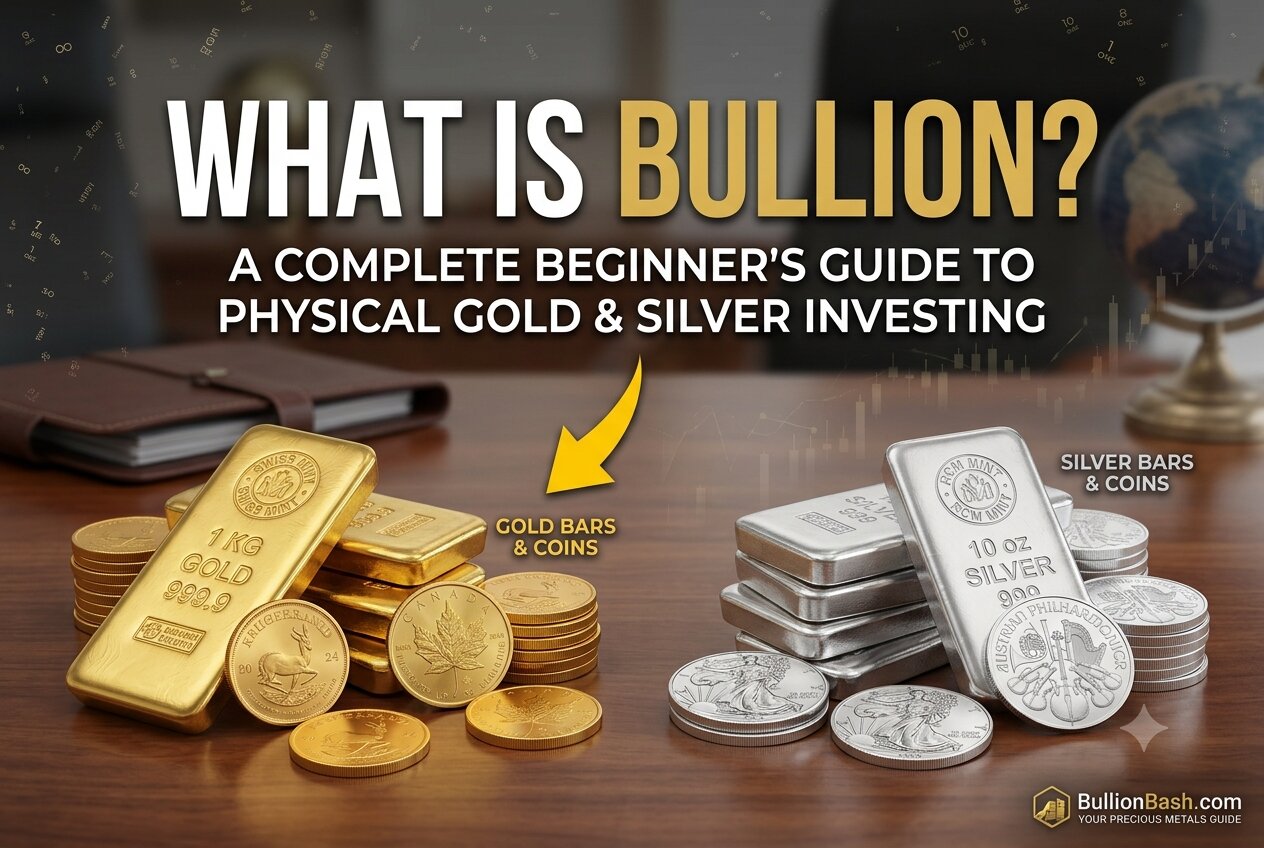
At its core, what is bullion? Bullion refers to physical precious metals, most commonly gold, silver, platinum, or palladium, that are valued primarily by their metal content, weight, and purity, rather than their artistic design, age, or collector rarity.
Unlike rare “numismatic” coins that might be worth thousands because they are old, bullion is valued based on the spot price of the metal in the global market. When you buy bullion, you are buying pure or near-pure metal. It is the raw material of global finance.
2. The Types of Bullion You Need to Know
Understanding the forms of bullion is the first step in building a smart portfolio.
A. Bullion Bars
Bars are the most common form of investment-grade bullion. They are typically stamped with their weight, purity (fineness), and the mint’s hallmark. They are efficient to store and usually carry a lower “premium” over the spot price compared to coins.
B. Bullion Coins
These are not meant for daily circulation. Mints like the U.S. Mint, the Royal Canadian Mint, and the Perth Mint produce these coins specifically for investors. They are guaranteed by their respective governments for weight and purity.
C. Rounds
Rounds look like coins, but they are minted by private companies rather than government mints. They are a great way to acquire silver at a lower cost, though they lack the official government guarantee of a legal tender coin.
3. Why Should You Include Bullion in Your Portfolio?
Many investors view bullion as the ultimate “safe haven.” Here is why:
- Inflation Hedge: When a currency loses purchasing power, precious metals have historically retained value.
- Portfolio Diversification: Bullion often moves independently of the stock market. When stocks fall, metals often rise.
- Tangible Asset: Unlike a stock certificate or a digital wallet, bullion is a physical asset that you hold in your hands. It carries no “counterparty risk.”
4. Understanding Market Value and Premiums
This is where many beginners get confused. You check the gold price in the news, go to a dealer, and find it’s actually higher. Why?
The price you see on the news is the Spot Price. The price you pay is the Spot Price + Premium. The premium covers the cost of minting, distribution, and the dealer’s margin.
Pro-Tip: Managing Premiums
If you are investing for the long term, focus on the “price per ounce.” Buy in larger quantities to reduce the percentage of the premium you pay per ounce. For example, buying a 10 oz bar often has a lower premium per ounce than buying ten individual 1 oz bars.
5. The “80/50 Rule” and Portfolio Management
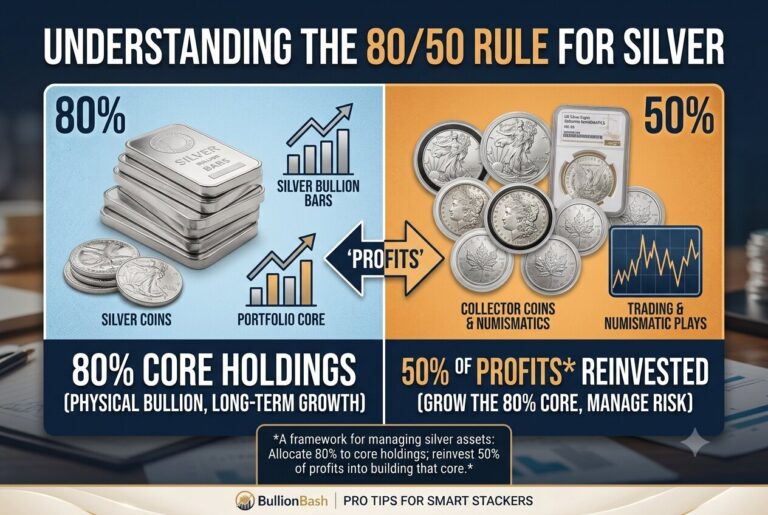
We previously discussed the 80/50 Rule for Silver. It is a perfect strategy for bullion.
- 80% Core Holdings: Keep the majority of your investment in physical, low-premium bullion bars.
- 50% Profit Reinvestment: When your portfolio grows, use 50% of the profits to stack more core bullion, ensuring you keep growing your foundation while balancing risk.
6. Proper Storage: Protecting Your Investment
Once you buy bullion, you must protect it. Improper storage can lead to oxidation (in silver) or physical damage.
- Climate Control: Humidity is the enemy of silver bullion. Use a dehumidifier in your safe or storage area.
- Air-Tite Capsules: Always store high-quality silver bullion in airtight, non-PVC capsules to prevent tarnish.
- Security: Never advertise your holdings on social media. Discretion is your best security system.
7. Bullion vs. Numismatics: A Comparison Table
| Feature | Bullion | Numismatics (Collectibles) |
| Value Basis | Metal content (Weight/Purity) | Rarity, Age, Condition |
| Primary Goal | Wealth preservation | Investment + Hobby |
| Premiums | Generally lower | Can be very high |
| Market | Highly liquid, global | Subjective, niche |
8. Frequently Asked Questions
1. Is bullion a taxable asset?
In many jurisdictions, bullion is treated as a capital asset. However, tax laws vary wildly by country. Always consult a local tax advisor regarding capital gains on precious metals.
2. Where should I buy bullion?
Only buy from reputable, established dealers with a high rating on trust platforms. Avoid “too good to be true” deals on unauthorized social media marketplaces.
3. What is the difference between 999 and 9999 purity?
999 means 99.9% pure, while 9999 means 99.99% pure. For most investors, the difference is negligible, but government mints often prefer 9999 for their premium products.
4. Can I hold bullion in my retirement account?
Yes, in some countries, you can hold “physical gold or silver” in a self-directed IRA or pension plan. This is called a “Gold IRA.”
9. Conclusion
Bullion is more than just a metal—it is a store of value that has survived the rise and fall of countless empires and currencies. By focusing on physical bullion, maintaining low premiums, and ensuring secure storage, you are building a financial foundation that is truly “solid as gold.”