What is 999 Fine Gold? The Ultimate Purity & Resale Value Guide

If you have ever held a shiny gold bar or a beautiful bullion coin in your hand, you probably noticed a tiny number stamped into the metal. Usually, it says “999” or “999.9” right next to a little stamp. If you are new to the world of precious metals, you might be wondering what this number means and why investors talk about it with such respect.
To put it simply, buying 999 fine gold is the ultimate way to own pure physical gold without any other metals mixed in. It represents the highest standard of purity available in the retail market. But why isn’t it 100% pure? How do you calculate its actual cash value? And is it a good idea to buy this type of gold for everyday jewelry? Let’s dive deep into this simple guide and answer all your questions about pure gold purity, resale value, and smart buying strategies.
What Does the “999” Purity Stamp Actually Mean?
When you buy gold, you aren’t just buying a shiny yellow rock. You are buying a specific level of purity. Governments and refineries around the world use a special system to measure exactly how much real gold is inside any given piece.
Understanding Millesimal Fineness
In the gold industry, experts use a system called millesimal fineness to describe purity. Instead of using percentages (like saying something is $99.9\%$ pure), they measure purity parts per thousand.
So, when a gold bar is stamped with 999, it means that out of 1,000 parts of melted metal, exactly 999 parts are pure, raw gold. The remaining 1 part is just a microscopic trace of other elements (such as silver or copper) that are impossible to completely filter out.
VISUALIZING 999 GOLD PURITY
| Component | Amount | Percentage |
|---|---|---|
| Pure Gold | 999 Parts | 99.9% |
| Trace Metals | 1 Part | 0.1% |
| Purity Rating | 24 Karat Gold | Highest Standard |
Is 999 Gold the Same as 24K?
Yes, absolutely! 24 karat (24K) is just the older, traditional way of saying pure gold. The karat system divides gold into 24 equal parts:
- 24K Gold = 24 out of 24 parts are gold ($99.9\%$ pure).
- 22K Gold = 22 parts gold, 2 parts other metals ($91.6\%$ pure).
- 18K Gold = 18 parts gold, 6 parts other metals ($75\%$ pure).
So, if you see a coin stamped with 24K or 999, they are talking about the exact same level of purity. The only difference is that modern bars and coins usually prefer the decimal stamp because it is much more precise for international trade.
999 vs 999.9 Gold: Does the Extra Decimal Matter?
If you start browsing online gold dealers, you will notice that some products are labeled as “three nines” (999) and others are labeled as “four nines” (999.9). It sounds like a big deal, but let’s break down the actual difference.
The Science of “Three Nines” vs “Four Nines”
- 999 Gold: This is $99.9\%$ pure. This is the standard purity for most classic gold coins, such as the famous British Britannia and the Chinese Panda.
- 999.9 Gold: This is $99.99\%$ pure. This is a slightly higher level of refining. It is the standard for most modern gold bars produced by premium Swiss refineries such as PAMP and Valcambi, as well as for coins like the Canadian Maple Leaf.
Editor’s Note: This guide was manually reviewed and updated in June 2026 by our in-house precious metals team. We checked current scrap market rates and minting standards to ensure all calculations and purity details are 100% accurate for physical collectors.
Is There an Actual Price Difference When Selling?
Honestly? Not really. When you go to sell your gold back to a local coin shop or a scrap dealer, they will pay you based on the weight of the pure gold content.
The price difference between $99.9\%$ and $99.99\%$ purity is so tiny (only $0.09\%$) that most local shops don’t even account for it. They will treat both as pure 24 karat gold and offer you the exact same rate per gram. However, some collectors prefer buying 999.9 gold bars simply because they like the premium look and the fancy assay card packaging.
Why You Shouldn’t Buy 999 Fine Gold for Everyday Jewelry
Since pure gold is the most valuable and looks the most beautiful, you might think it is the perfect material for an everyday wedding ring or a heavy chain. But honestly, that is a huge mistake.
The Softness Dilemma of Pure 24K Gold
In its purest form, gold is an incredibly soft, malleable metal. You can literally dent a pure gold bar with your fingernail if you press hard enough!
If you make a ring out of pure 999 fine gold and wear it while washing dishes, lifting weights, or even opening doors, the metal will bend out of shape very quickly. It will also get covered in deep, ugly scratches within a few weeks, and any precious gemstones set inside will easily fall out and get lost.
GOLD PURITY VS. DURABILITY
| Gold Purity Stamp | Common Use Case | Durability Level |
|---|---|---|
| 999 / 24K | Investment Bars & Bullion Coins | Very Soft (Damages Easily) |
| 916 / 22K | Wedding Jewelry & Durable Coins | Moderate (Slightly Alloyed) |
| 750 / 18K | Fine Jewelry & Diamond Rings | High (Great for Gem Settings) |
| 585 / 14K | Everyday Wear & Active Jewelry | Very High (Scratch Resistant) |
Best Alternatives for Wearable Gold
If you want wearable jewelry that still holds great value, you should look for alloyed gold:
- 22K Gold (916 Fineness): This is the gold standard for traditional Asian and Middle Eastern wedding jewelry. It is $91.6\%$ pure gold mixed with a tiny bit of copper or silver to make it strong enough to hold its shape while maintaining that rich, bright yellow color.
- 18K Gold (750 Fineness): This is what most luxury European jewelry brands (like Cartier) use for diamond rings. It is $75\%$ pure, making it tough enough to securely lock diamonds in place while still looking incredibly elegant.
How is the Price of 999 Gold Calculated?
Understanding the math behind gold pricing is the absolute best shield against getting ripped off by greedy dealers. Don’t worry, the math is super simple, and you can do it on your phone calculator in ten seconds.
Spot Price vs Premium Fees
When you look up the price of gold on Google, you are seeing the spot price. This is the raw market value of one troy ounce of pure gold traded on global stock exchanges.
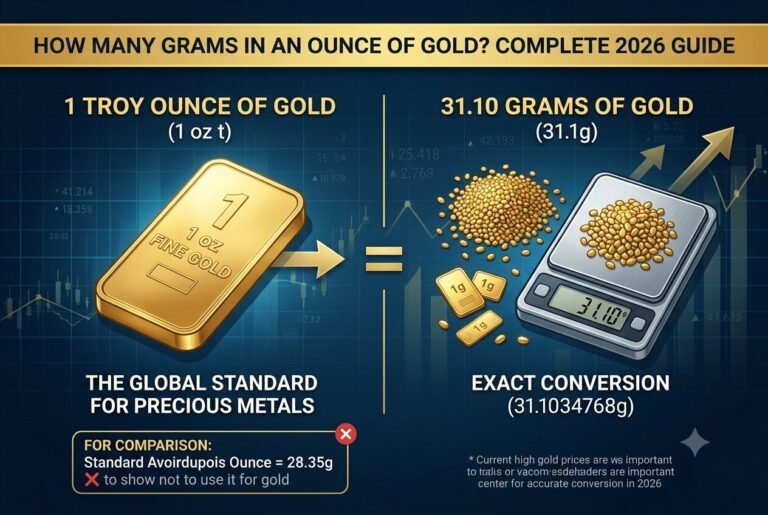
- 1 Troy Ounce = Exactly $31.103$ grams.
However, when you go to buy a physical gold bar from a dealer, you will always pay a little bit more than the spot price. This extra charge is called the premium fee. It covers the cost of refining the metal, minting the coin, shipping, insurance, and the dealer’s profit.
- Gold Bars: Usually have low premiums (typically $2\%$ to $4\%$ over spot).
- Bullion Coins: Usually have slightly higher premiums ($4\%$ to $8\%$ over spot) because they are more beautiful and harder to mint.
How to Calculate the Scrap Value of Your Gold
If you have an old gold bar or scrap item and want to know its raw melt value before selling, use this simple formula:
$$\text{Value} = \text{Weight of Item (in grams)} \times \left( \frac{\text{Current Gold Spot Price per Ounce}}{31.103} \right) \times \text{Purity}$$
Let’s do a real-world example. Imagine you have a gold bar that weighs 50 grams, and the current spot price of gold is $2,200 per ounce. Since your bar is 999 purity, your purity multiplier is $0.999$.
- First, find the price of gold per gram:
$$\$2,200 / 31.103 = \$70.73 \text{ per gram}$$
- Now, multiply that by the weight of your bar:
$$50 \text{ grams} \times \$70.73 = \$3,536.50$$
- Finally, multiply by the purity ($0.999$):
$$\$3,536.50 \times 0.999 = \$3,532.96$$
This means the raw gold value of your bar is exactly $3,532.96. If a dealer offers you $2,500 for it, you know they are trying to scam you! Always do this quick math before stepping foot into a coin shop.
How to Verify and Check Your 999 Gold Purity Safely
Because pure gold is so expensive, counterfeiters are getting incredibly clever. They will often take cheap copper, brass, or lead and coat it with a microscopic layer of real gold to fool beginners. Here is how to protect your cash with simple home checks.
999 GOLD TESTING CHECKLIST
| Test Name | What You Need | 999 Gold Reaction |
|---|---|---|
| 1. Hallmark Check | Magnifying Glass | Must have “999” or “24K.” |
| 2. Magnet Test | Neodymium Magnet | No attraction (non-magnetic) |
| 3. Weight Test | Digital Scale & Caliper | Heavy weight, exact size |
1. Inspecting the Hallmarks and Stamps
Every authentic piece of bullion must carry an official hallmark stamp. Take a magnifying glass and look closely at the surface of your bar or coin. You should clearly see:
- The exact weight (e.g., “1 oz” or “10g”).
- The purity number (e.g., “999” or “999.9”).
- The official logo of the refinery (like Valcambi, PAMP, or the Royal Canadian Mint).
If the stamp looks blurry or uneven, or contains spelling mistakes, it is a massive red flag. Counterfeiters often use cheap stamping machines that leave sloppy marks.
2. The Strong Magnet Test
Pure gold is completely non-magnetic. It will never stick to a magnet, no matter how powerful it is.
- The Check: Take a strong neodymium magnet (not a weak kitchen fridge magnet) and hold it near your gold item. If the item slides toward the magnet, clicks against it, or shows even a tiny bit of pull, it is fake. It likely has a core made of steel or iron.
3. The Digital Weight and Size Test
This is the hardest test for counterfeiters to beat. Gold is incredibly dense ($19.3 \text{ g/cm}^3$). Metals like copper or brass are much lighter.
- The Check: If you are buying a standard 1 oz bullion coin, look up its official dimensions (diameter and thickness) online. Weigh the coin on a digital scale. If a fake coin weighs exactly 1 troy ounce, it will have to be noticeably thicker or wider than the official measurements to compensate for copper’s lower density of copper. If it has the exact correct dimensions but is made of cheap metal, it will weigh much less than 1 oz.
Frequently Asked Questions (FAQs)
Does 999 gold tarnish or change color over time?
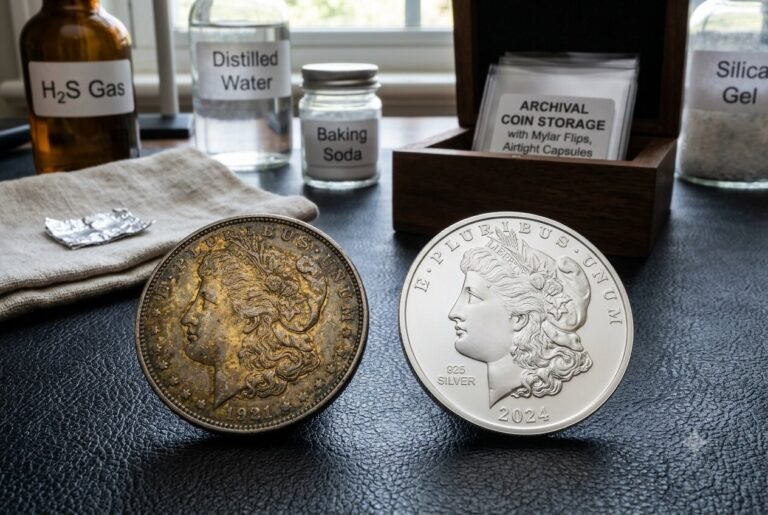
No, pure gold is chemically inert, meaning it does not react with oxygen, water, or acid. It will never rust, corrode, tarnish, or turn black. If you find a “gold” coin in your drawer with green or dark brown spots on the surface, it is either fake or a low-purity alloy (like 10K gold), where the copper inside is reacting with the air.
Why is 999 gold so incredibly yellow?
Pure gold has a very distinct, rich, almost orange-yellow metallic glow. When gold is mixed with other metals to make jewelry (like 14K), those other metals (like silver or zinc) dilute the color, making it look much paler. This is why 24K gold has that famous, warm, luxury look that is impossible to mistake.
Can I melt down 999 gold jewelry to make bars?
Yes, you can. Any local refinery or professional jeweler can melt down your old 24K scrap jewelry and pour it into a clean investment bar. However, keep in mind that you will lose any artistic or designer value the jewelry had, and you will have to pay a small melting fee to the shop.
Conclusion
At the end of the day, understanding the fundamentals of metal purity is the best way to grow your financial portfolio safely. Staying educated on how 999 fine gold works, tracking the live spot price, and learning how to verify hallmarks are your ultimate defenses against market scams. If you want a secure asset that will protect your family’s purchasing power against inflation and economic crises for decades to come, physical pure gold is the absolute king of investments. Happy stacking!