Why Silver Coins Tarnish: Causes & Prevention

Silver coins tarnish because silver reacts chemically with hydrogen sulfide (H2S) and other sulfur compounds in the air, forming a dark layer of silver sulfide (Ag2S) on the surface. This reaction is accelerated by moisture, oxygen, skin oils, and environmental pollutants. 1. What Is Silver Coin Tarnish? If you have ever pulled a silver coin…
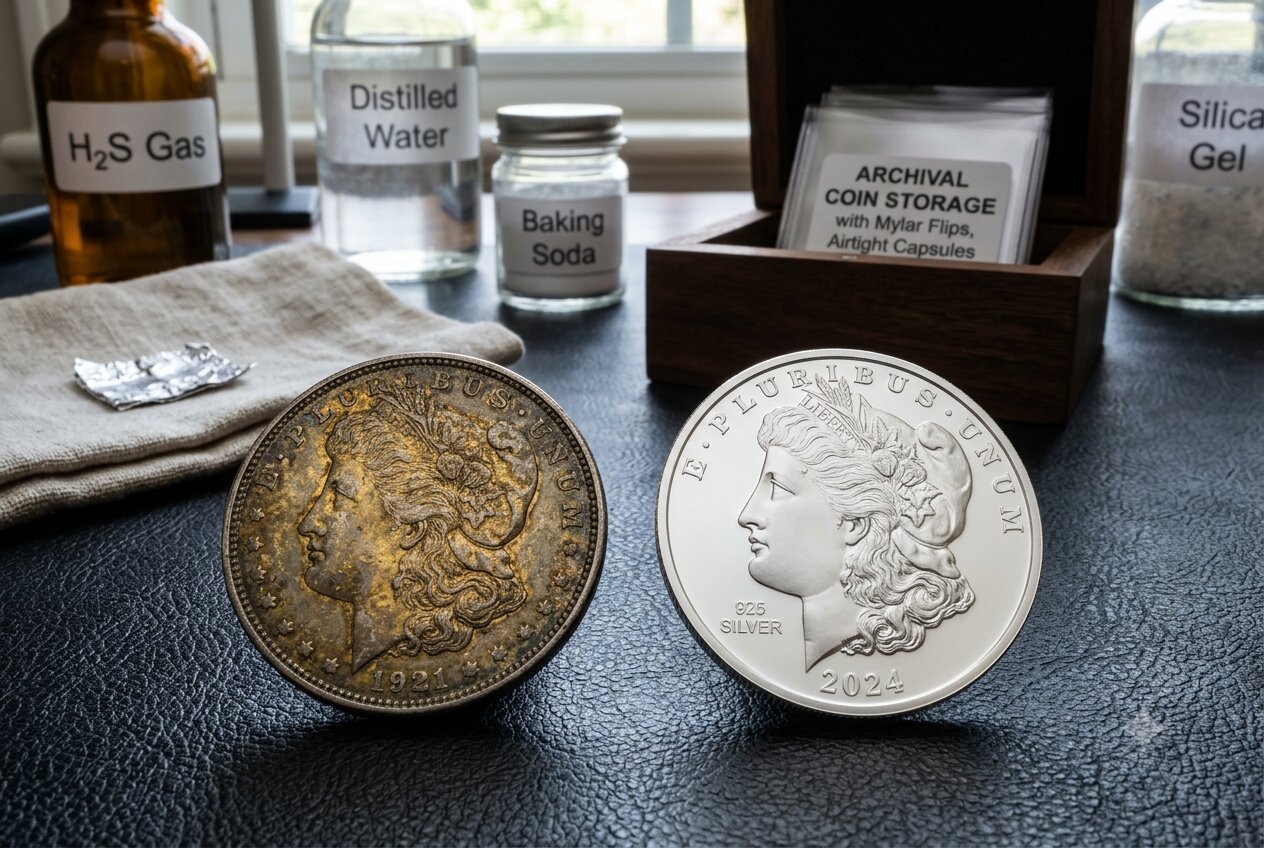
Silver coins tarnish because silver reacts chemically with hydrogen sulfide (H2S) and other sulfur compounds in the air, forming a dark layer of silver sulfide (Ag2S) on the surface. This reaction is accelerated by moisture, oxygen, skin oils, and environmental pollutants.
1. What Is Silver Coin Tarnish?
If you have ever pulled a silver coin out of a drawer and noticed it has turned yellowish, brown, or even jet-black, you have witnessed tarnishing firsthand. Silver coin tarnish is a natural chemical process not a sign of damage or low quality. Even the finest .999 pure silver coins tarnish over time.
Tarnish is the thin layer of corrosion that forms on the surface of silver when it reacts with sulfur-containing gases in the environment. Unlike rust, which destroys iron, tarnish does not eat away the metal; it is a surface-level reaction. This means tarnish is reversible and manageable with the right knowledge.
Understanding why silver coins tarnish is the first step toward proper coin storage, preservation, and collection management. Whether you are a hobbyist, numismatist, or precious metals investor, this guide covers everything you need to know.
2. The Science Behind Tarnishing: What Actually Happens?
Silver (chemical symbol: Ag) is a noble metal, relatively resistant to corrosion but not fully immune, particularly to sulfur compounds.
The Core Chemical Reaction:
4 Ag + 2 H2S + O2 → 2 Ag2S + 2 H2O
In plain English: silver atoms combine with sulfur from hydrogen sulfide gas (present in trace amounts in air) to form silver sulfide (Ag2S). This compound is the dark, discolored layer you see on tarnished coins. Silver sulfide ranges in color from pale yellow to golden brown to deep black, depending on the thickness of the layer.
A secondary reaction with oxygen and moisture also produces silver oxide though this contributes less to visible tarnish than silver sulfide.
3. Top Causes of Silver Coin Tarnish
Hydrogen Sulfide in the Air
This is the single biggest culprit. H2S is released by decaying organic matter, industrial emissions, rubber bands, wool, certain paints, and paper products. Even indoor air contains trace H2S enough to slowly tarnish silver over time.
Oxygen and Moisture Combined
High-humidity environments such as coastal areas, basements, or poorly ventilated storage spaces are especially problematic. Moisture acts as a catalyst, speeding up both sulfide and oxide reactions.
Skin Oils and Sweat
Human skin secretes oils, salts, and amino acids. When you handle silver coins without gloves, these substances transfer to the coin surface and react with silver, leaving fingerprint tarnish that can be extremely difficult to remove. Always handle coins by their edges only.
Chlorine and Chloride Compounds
Found in tap water, swimming pools, cleaning products, and some storage materials. Chlorine reacts with silver to form silver chloride (AgCl), appearing as a whitish-gray discoloration.
Air Pollution and Industrial Contaminants
Vehicle exhaust and industrial gases contain elevated sulfur dioxide (SO2) and nitrogen oxides that accelerate silver tarnish. Silver coins stored in cities tarnish measurably faster than those in rural areas.
4. Factors That Speed Up Tarnishing
- High Humidity (above 50% RH) dramatically accelerates all tarnishing reactions
- Heat increases the rate of chemical reactions, causing faster tarnish
- Poor Storage Materials such as PVC flips and rubber bands off-gas harmful chemicals
- Improper Handling touching coins with bare hands introduces tarnish-causing contaminants
- Light Exposure UV light can accelerate certain oxidation reactions on silver
- Low Silver Purity coins with high copper alloy content tarnish faster than .999 fine silver
5. How to Prevent Silver Coins from Tarnishing
Use Archival-Quality Storage Materials
Always use acid-free, sulfur-free, PVC-free storage products. Mylar flips, inert polystyrene holders, and certified archival coin albums are the gold standard for coin preservation.
Control Humidity and Temperature
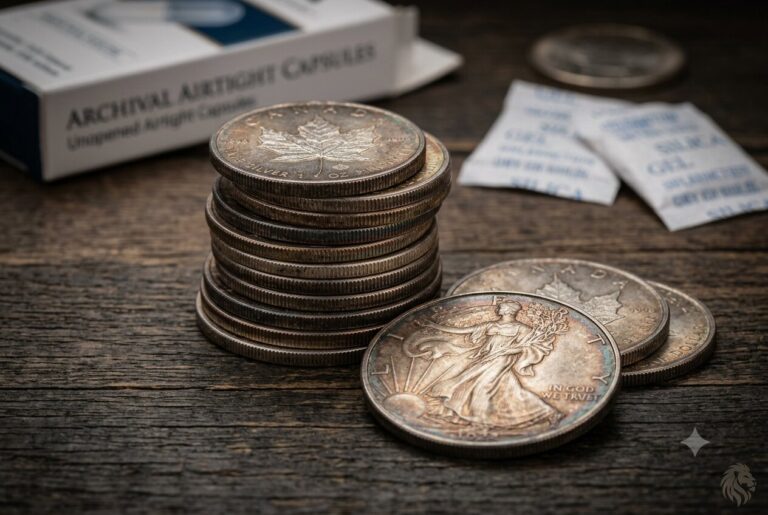
Store silver coins in a cool, dry environment with relative humidity between 35% and 45%. Use silica gel desiccant packets inside your storage containers to absorb excess moisture.
Use Anti-Tarnish Products
Pacific Silvercloth and 3M Anti-Tarnish Strips absorb sulfur compounds from the surrounding air before they can reach your coins. Place these inside storage containers or display cases.
Handle Coins Properly
Always handle silver coins by their edges. Wear clean cotton or nitrile gloves when examining coins. Even a single fingerprint can leave a lasting tarnish mark over time.
Use Airtight Coin Capsules
For high-value silver coins, airtight acrylic capsules (like AIRTITE holders or NGC/PCGS slabs) provide an excellent barrier against atmospheric tarnish.
6. How to Remove Tarnish from Silver Coins
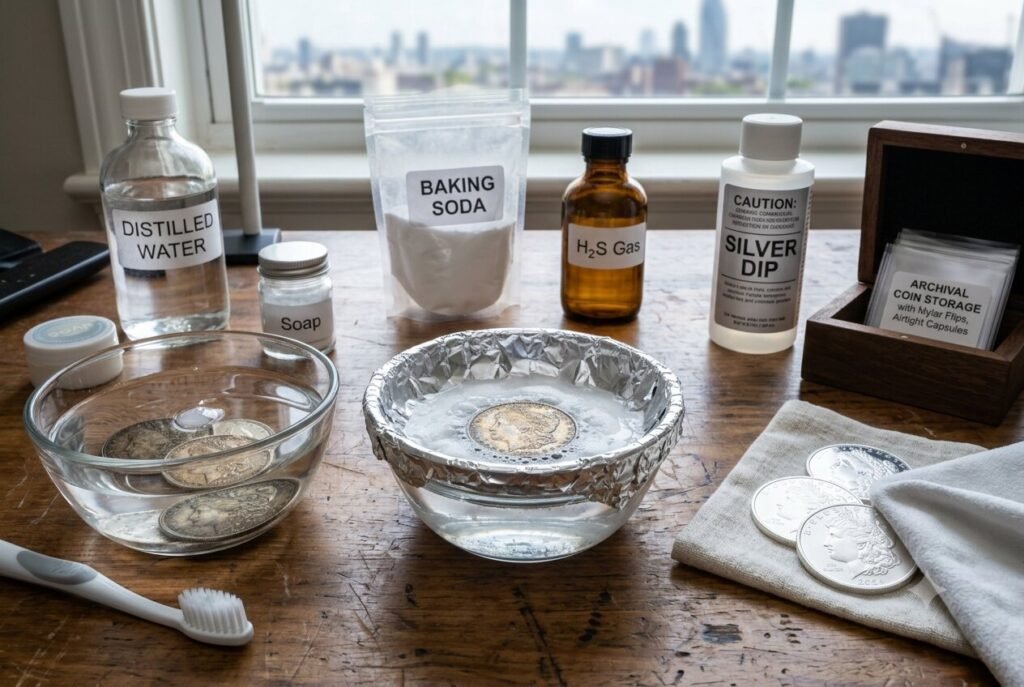
Mild Soap and Water (Safest Method) Step by Step:
- Fill a clean bowl with lukewarm distilled water
- Add one drop of pure, fragrance-free dish soap
- Gently submerge the coin and soak for 5 to 10 minutes
- Use a very soft toothbrush to gently loosen surface dirt
- Rinse thoroughly with clean distilled water
- Pat dry with a soft, lint-free cloth never rub
Electrochemical Method (Baking Soda + Aluminum Foil)
Line a glass bowl with aluminum foil, add hot water and a tablespoon of baking soda, then place the tarnished coin on the foil. The aluminum attracts sulfur away from the silver. Do NOT use this on collectible coins as it removes valuable toning.
Commercial Silver Dips (Use with Extreme Caution)
Products like Hagerty Silver Dip work quickly but are harsh and can strip the coin’s surface. Never use graded or numismatic coins.
7. Should You Clean Tarnished Coins?
In most cases: No. Cleaning tarnished coins almost always reduces their numismatic value. Natural toning and patina are considered desirable by experienced collectors and grading services like PCGS and NGC.
Grading services specifically mark coins as “Cleaned” when they detect unnatural surface treatment, a designation that can cut a coin’s market value by 50% or more.
Rule of thumb: clean coins only for bullion (non-collectible silver bought for melt value), and leave all collectible coins alone.
8. Expert Tips for Long-Term Silver Coin Care
- Inspect your coins every 6 to 12 months early-stage tarnish is much easier to manage
- Replace old PVC flips, paper envelopes, or deteriorating albums immediately
- Photograph each coin front and back to establish a baseline record
- Get valuable coins professionally graded and slabbed for the best long-term protection
- Never store silver near rubber or wool these off-gas sulfur compounds rapidly
- Use climate-controlled storage for large or valuable collections
- Learn to recognize valuable natural toning versus unattractive tarnish damage
9. Frequently Asked Questions (FAQ)
Why do silver coins turn black?
Black tarnish indicates a thick layer of silver sulfide (Ag2S) from heavy, long-term sulfur exposure. It is still surface-level and does not affect the coin’s metal content or weight.
Why do silver coins turn yellow or golden?
Yellow or golden toning is early-stage tarnish. Thin silver sulfide layers appear yellow before progressing to brown and then black. Beautiful golden toning is highly prized by collectors.
Does tarnish damage silver coins permanently?
Standard tarnish is a surface reaction and does not damage the underlying metal. However, in highly corrosive environments over very long periods, it can eventually cause pitting. Proper storage prevents this.
How fast do silver coins tarnish?
A coin in an airtight capsule in climate-controlled storage may show no visible tarnish for 20 to 50+ years. The same coin left in open air with high humidity could tarnish within weeks.
Is rainbow toning on silver coins natural?
Yes. Rainbow toning develops slowly over decades and results from thin-film optical interference of varying-thickness silver sulfide layers. Genuine rainbow-toned coins are highly prized by collectors.
Conclusion
Silver coins tarnish because silver reacts with sulfur-containing compounds in the atmosphere to form silver sulfide, producing the yellow, brown, and black discoloration we call tarnish. This process is accelerated by moisture, heat, skin oils, poor storage materials, and air pollution.
With the right knowledge, you can dramatically slow tarnish formation or prevent it entirely. Use archival-quality storage, handle coins properly, control your environment, and use anti-tarnish products for long-term protection.
Remember: Not all tarnish is the enemy. Beautiful natural toning can be a sign of authenticity and historical value. The key is knowing the difference between tarnish to remove and toning to preserve.